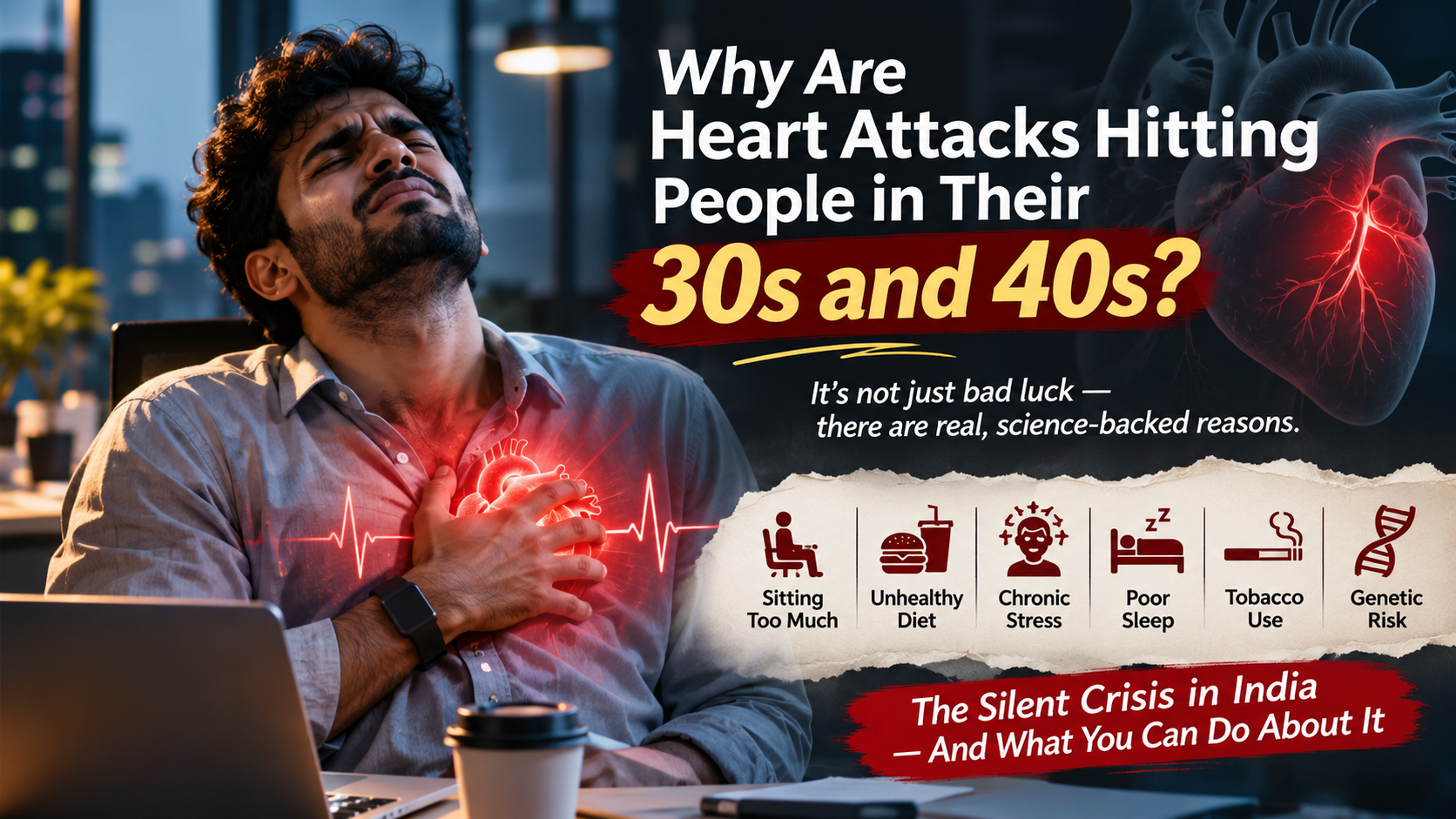
Heart attacks aren't just for 60-year-olds anymore. Across India, stories of seemingly healthy young professionals, entrepreneurs, athletes and even people in their early 30s collapsing from cardiac events are raising an uncomfortable question: Are we witnessing a generation ageing faster than its birth certificates suggest?
Imagine a 35-year-old man.
He wakes up at 7 AM, rushes through breakfast, spends nine hours at his desk, survives on coffee, orders dinner late at night and finally goes to bed after scrolling through his phone. He has a job, financial responsibilities, perhaps a young family and plans for the next 30 years.
He doesn't consider himself sick.
He doesn't have a history of heart disease. He might even look perfectly healthy.
Then, one ordinary morning, he experiences chest discomfort. He dismisses it as acidity. Perhaps he assumes it is muscle pain or exhaustion.
A few hours later, he is in an emergency department with a heart attack.
For his family, life changes in an instant.
For everyone who knew him, one question remains:
How can someone so young have a heart attack?
This is not simply a story about unhealthy lifestyles. It is a much larger public-health problem involving genetics, metabolic disease, tobacco consumption, air pollution, stress, sleep, diet and the changing nature of modern Indian life.
And the most concerning part is that cardiovascular disease often develops silently for years before its first dramatic symptom appears.
Let's understand what the science actually says.
Why this matters particularly in India
There is an important scientific reason this conversation deserves special attention in India: South Asians have historically experienced coronary artery disease at younger ages than several other populations.
A landmark analysis published in the Journal of the American Medical Association (JAMA) in 2007 examined first heart attacks among South Asians and individuals from other countries.
The researchers found that the average age at first heart attack was approximately 53 years among South Asians, compared with 58.8 years among participants from other countries.
That is a difference of almost six years.
The study also found that South Asians had a higher prevalence of certain risk factors, including abnormal blood lipid profiles, diabetes and insufficient physical activity.
Importantly, the researchers concluded that the earlier occurrence of heart attacks could largely be explained by the higher prevalence of cardiovascular risk factors at younger ages.
This is a critical finding. It suggests that the problem is not simply that South Asians have an unavoidable genetic disadvantage. The accumulation of modifiable risk factors plays a substantial role.
Source: Joshi et al., 2007 – Risk Factors for Early Myocardial Infarction in South Asians, JAMA.
A more recent Indian perspective comes from the North India STEMI Registry study, published in the Indian Heart Journal in 2024.
Among 5,335 hospitalised patients with ST-elevation myocardial infarction (STEMI), 1,752 (32.8%) were younger than 50.
Among these younger patients:
75.1% had physical inactivity.
66.6% had tobacco use.
16% had diabetes.
18.5% had hypertension.
These figures describe patients who had already suffered a heart attack and were included in a hospital registry. They should not be interpreted as the prevalence of these risk factors among all young Indians.
Nevertheless, the findings provide a concerning picture of the risk profile of younger patients presenting with serious cardiac events.
Source: Gupta et al., 2024 – NORIN STEMI Registry, Indian Heart Journal.
1. The real culprit: A heart attack is often decades in the making
Before discussing lifestyle, stress or genetics, we need to understand what actually happens inside the body.
A heart attack, medically known as an acute myocardial infarction, occurs when blood supply to a portion of the heart muscle is suddenly interrupted, causing damage to that muscle.
The most common mechanism involves atherosclerosis.
Atherosclerosis is the gradual accumulation of cholesterol-rich plaques within the walls of arteries.
Imagine a water pipe slowly accumulating deposits along its inner surface. The passage becomes narrower over time. Something similar can happen inside the coronary arteries that supply blood to the heart.
But there is an important distinction.
A heart attack does not necessarily happen because an artery has gradually become 100% blocked.
Sometimes, a plaque that has been developing for years suddenly ruptures. The body responds by forming a blood clot at the damaged site. That clot can rapidly obstruct blood flow, causing a heart attack.
This explains something that often confuses families:
A person can appear perfectly functional one day and suffer a life-threatening heart attack the next.
The disease may have been developing silently for years. The symptoms may appear suddenly, but the underlying process often isn't sudden.
Scientific reference: WHO – Heart Attack.
2. Why are younger Indians increasingly vulnerable?
There is no single explanation. Instead, several risk factors can interact, sometimes beginning much earlier in life than people realise.
Let's examine the major contributors.
A. The South Asian genetic and metabolic disadvantage
This is one of the most important aspects of the discussion.
South Asians, including Indians, have a distinctive cardiovascular risk profile.
Research has repeatedly identified a greater susceptibility to coronary artery disease in South Asian populations, often at younger ages and sometimes at lower levels of body mass index (BMI) than in several other populations.
But what does that actually mean?
It does not mean every Indian is genetically destined to develop heart disease.
Rather, certain population-level characteristics can influence how cardiovascular risk develops.
These include:
Greater tendency towards abdominal fat accumulation.
Higher prevalence of insulin resistance in susceptible individuals.
Differences in lipid profiles.
Higher prevalence of type 2 diabetes at relatively younger ages.
Genetic variations that influence cholesterol metabolism and cardiovascular risk.
One particularly important measure is the waist-to-hip ratio.
A person may have a relatively normal BMI but still carry considerable abdominal fat. This is sometimes described as the thin-fat phenotype or metabolically obese normal-weight phenotype.
Visceral fat, which accumulates around internal organs, is metabolically active. It is associated with insulin resistance, inflammation, abnormal lipid levels and increased cardiovascular risk.
This is why simply looking at someone's weight can be misleading.
A slim-looking individual is not automatically protected from heart disease.
Research published in The Lancet through the INTERHEART study identified abdominal obesity, abnormal blood lipids, smoking, diabetes and hypertension among the major modifiable contributors to myocardial infarction worldwide.
The findings were consistent across geographical regions and age groups.
Source: Yusuf et al., 2004 – INTERHEART Study, The Lancet.
B. Diabetes is becoming a cardiovascular problem, not just a sugar problem
When people hear the word diabetes, they often think about blood sugar, insulin injections and avoiding sweets.
But diabetes is also one of the most important risk factors for cardiovascular disease.
Persistently elevated blood glucose, together with insulin resistance and other metabolic disturbances, contributes to damage in blood vessels and accelerates atherosclerosis.
People with diabetes also frequently have other associated risk factors, including hypertension, abnormal triglycerides and low HDL cholesterol.
The Indian situation deserves particular attention.
The landmark ICMR-INDIAB study, published in The Lancet Diabetes & Endocrinology in 2023, assessed 113,043 individuals across India.
Its estimated national prevalence of:
Diabetes was 11.4%.
Prediabetes was 15.3%.
Hypertension was 35.5%.
Generalised obesity was 28.6%.
Abdominal obesity was 39.5%.
These estimates are based on the study's weighted adult population and should not be interpreted as figures exclusively for people in their 30s and 40s.
Nevertheless, they reveal the scale of India's metabolic health challenge.
Think about the implications.
A person who develops insulin resistance in their 20s may progress to prediabetes and subsequently diabetes without recognising the changes.
If hypertension and abnormal cholesterol are also present, cardiovascular risk can accumulate silently.
The danger is not necessarily one isolated condition. It is the combination.
The heart does not wait until someone turns 60 to experience the consequences of decades of metabolic damage.
C. Smoking, vaping and tobacco: The risk people underestimate
A cigarette does considerably more than damage the lungs.
Smoking affects the cardiovascular system through several mechanisms:
It damages the lining of blood vessels.
It promotes inflammation.
It increases oxidative stress.
It makes blood more prone to clotting.
It can increase heart rate and blood pressure.
It accelerates the development of atherosclerosis.
And the risk is not restricted to people who smoke a packet every day.
Even relatively low levels of cigarette smoking can carry substantial cardiovascular risk.
India also has a different tobacco landscape from many Western countries.
Exposure is not limited to cigarettes. It includes bidis, chewing tobacco, gutka and other smokeless tobacco products.
Smokeless tobacco should not be considered a safe alternative. It carries serious health risks, and its cardiovascular effects are a concern.
Vaping is not a proven cardiovascular-safe alternative either. Evidence on its long-term effects continues to develop, but it should not be marketed as harmless.
The INTERHEART study identified smoking as one of the strongest modifiable risk factors associated with acute myocardial infarction.
There is an uncomfortable reality here:
A person may exercise regularly, maintain a reasonable body weight and still expose their cardiovascular system to significant risk through tobacco use.
Reference: INTERHEART, The Lancet, 2004.
D. The modern Indian diet: More calories, less nutritional quality
India's food habits have changed considerably over the past few decades.
Traditional diets have increasingly been supplemented or replaced by highly processed convenience foods, packaged snacks, sugar-sweetened beverages, frequent restaurant meals and foods high in sodium and unhealthy fats.
The problem is not that every packaged food is dangerous or that every traditional Indian meal is healthy.
The nutritional composition and overall dietary pattern matter.
Consider a typical working day:
Breakfast is skipped or replaced with a sweetened coffee.
Lunch is eaten quickly, often with limited vegetables.
Evening snacks consist of biscuits, fried snacks or packaged foods.
Dinner arrives late, sometimes through food delivery.
Sugary beverages and desserts become routine.
Over time, such a pattern can contribute to excess calorie intake, weight gain, hypertension, abnormal cholesterol and insulin resistance.
High sodium intake is particularly relevant to blood pressure.
Excessive consumption of saturated fats can increase LDL cholesterol, while replacing them with industrial trans fats is especially harmful.
On the other hand, diets rich in vegetables, fruits, whole grains, legumes, nuts and appropriate sources of unsaturated fats support cardiovascular health.
The point is not to eliminate Indian food.
It is to rethink what has become normal in our everyday eating habits.
Reference: WHO – Cardiovascular Disease Prevention.
E. Sitting all day: The hidden cost of a desk job
A generation of Indians now spends a considerable part of the day sitting.
Software engineers, accountants, consultants, designers, managers, students and other professionals may remain seated for eight to twelve hours.
Some spend almost the entire day moving between a chair, a vehicle and a sofa.
The problem is that the human body is designed for regular movement.
Physical inactivity is associated with increased cardiovascular risk and contributes to obesity, insulin resistance, hypertension and poor metabolic health.
The INTERHEART study found that regular physical activity was associated with lower odds of myocardial infarction.
The 2024 NORIN STEMI registry also found that physical inactivity was extremely common among younger patients hospitalised with STEMI.
However, there is an important distinction between being physically inactive and having a sedentary occupation.
A person with a desk job can still achieve meaningful daily physical activity through walking, cycling, exercise and other movement.
The objective should be to break prolonged sitting and establish consistent movement throughout the day.
A gym session in the evening is valuable, but it should not be treated as permission to remain completely inactive for the other 15 hours.
References: INTERHEART and NORIN STEMI Registry.
F. Chronic stress, poor sleep and the pressure to succeed
This is where the modern Indian working environment deserves closer examination.
For many people in their 30s and 40s, life is not particularly relaxed.
There may be:
Career competition and job insecurity.
Financial obligations and home loans.
Family responsibilities.
Long working hours.
Night shifts and irregular schedules.
Pressure to maintain a particular lifestyle.
Constant digital connectivity.
Stress is a complex cardiovascular risk factor.
It can influence blood pressure, sleep, eating patterns, physical activity and metabolic health.
The INTERHEART psychosocial analysis, also published in The Lancet in 2004, found significant associations between psychosocial factors, including stress and depression, and acute myocardial infarction.
But we must avoid exaggerating the evidence.
Stress alone should not be presented as the direct explanation for every heart attack in young adults. Its effects interact with established risk factors and individual susceptibility.
Sleep deserves similar attention.
Irregular sleep schedules, chronically insufficient sleep and sleep disorders such as obstructive sleep apnoea can affect blood pressure and metabolic health.
People working night shifts may find it particularly difficult to maintain regular sleep, eating and exercise routines.
This does not mean every night-shift worker will develop heart disease. It means occupational health and sleep deserve a place in cardiovascular prevention.
References: Rosengren et al., 2004 – INTERHEART Psychosocial Study; American Heart Association – Sleep and Cardiovascular Health.
G. Air pollution: The risk you cannot simply exercise away
There is another contributor that is frequently overlooked in conversations about young heart attack patients.
Air pollution.
For someone living in a major Indian city, exposure to particulate matter may be part of everyday life.
Fine particulate matter, particularly PM2.5, can penetrate deep into the respiratory system and contribute to systemic inflammation, oxidative stress, vascular dysfunction and other cardiovascular effects.
Long-term exposure has been associated with increased cardiovascular morbidity and mortality.
The problem is that an individual cannot completely control the air they breathe.
You can choose your diet, decide whether to smoke and make time for exercise. You cannot independently regulate the air quality of your neighbourhood.
This makes air pollution a public-health issue rather than merely an individual lifestyle issue.
A 2024 study published in The Lancet Planetary Health examined the relationship between long-term PM2.5 exposure and mortality in India using district-level data.
It adds to the growing body of evidence that air pollution is an important contributor to India's health burden.
This does not mean that every heart attack occurring in a polluted city was caused by pollution. Rather, pollution can contribute to cardiovascular risk at the population level.
H. High cholesterol without obvious symptoms
Perhaps one of the most dangerous misconceptions is that cholesterol problems are always visible.
They are not.
A person can have significantly elevated LDL cholesterol and feel completely normal.
There may be no fatigue, chest discomfort or obvious physical warning.
LDL cholesterol contributes to the development of atherosclerotic plaques. The longer a person remains exposed to elevated levels, the greater the opportunity for atherosclerotic disease to develop.
Genetics also matters.
Some individuals inherit familial hypercholesterolaemia, a condition in which LDL cholesterol can be extremely elevated from an early age.
Others may have elevated lipoprotein(a), commonly called Lp(a), which is largely genetically determined and associated with increased cardiovascular risk.
This deserves special attention in younger adults with:
A family history of premature heart attacks.
Unusually high LDL cholesterol.
Known familial hypercholesterolaemia.
Cardiovascular disease despite apparently healthy lifestyles.
An important point: a standard lipid profile does not measure Lp(a). A separate blood test is required.
A person can therefore have an apparently unremarkable routine cholesterol report while still having an inherited cardiovascular risk that deserves investigation.
3. The family history question: Did your parents' genes put you at risk?
Imagine two 35-year-old men.
Both eat reasonably well. Both exercise. Neither smokes.
One has no known family history of premature cardiovascular disease.
The other has a father who suffered a heart attack at 42 and an uncle who underwent bypass surgery before 50.
Should they be considered equally at risk?
Not necessarily.
Family history can provide important information about inherited susceptibility.
Certain inherited conditions, such as familial hypercholesterolaemia, can substantially increase cardiovascular risk from an early age.
Genetic susceptibility can also influence lipid metabolism, blood pressure and other pathways involved in coronary artery disease.
This is why doctors may ask whether a close relative experienced:
A heart attack at a relatively young age.
Sudden cardiac death.
Coronary bypass surgery or angioplasty at an early age.
Known inherited cholesterol disorders.
A family history is not a diagnosis, and the absence of one does not guarantee protection.
But ignoring it can mean missing an opportunity for early prevention.
If a parent had a heart attack at 40, waiting until you are 50 to investigate your own cardiovascular health is a poor strategy.
4. Not every heart attack in a young person has the same cause
There is another important scientific distinction.
Although atherosclerosis is the most common underlying cause of myocardial infarction, younger patients can experience heart attacks through other mechanisms.
A 2023 scientific review published in the Journal of the American Heart Association examined the causes and diagnostic challenges of myocardial infarction in young patients.
It highlighted several conditions that deserve attention.
Spontaneous coronary artery dissection (SCAD)
This occurs when a tear develops within the wall of a coronary artery, potentially obstructing blood flow.
Unlike conventional atherosclerotic heart attacks, SCAD can occur in people without typical cardiovascular risk factors.
It is particularly important in younger and middle-aged women.
Coronary artery spasm
A coronary artery can suddenly constrict, reducing blood supply to the heart muscle. This may cause a heart attack, particularly in certain clinical settings involving tobacco or stimulant drug exposure.
Coronary artery thrombosis
A blood clot can obstruct a coronary artery. Depending on the circumstances, this may involve abnormalities in blood clotting or other underlying conditions.
Drug-associated cardiovascular events
Stimulants such as cocaine and amphetamines can increase cardiovascular stress, provoke coronary artery spasm and contribute to myocardial infarction.
The broader lesson is that a young person experiencing a heart attack should not automatically be assumed to have conventional age-related coronary artery disease.
The underlying mechanism needs proper investigation.
5. The most dangerous misconception: A heart attack always announces itself
One of the reasons younger patients may delay seeking medical attention is that they do not recognise the symptoms.
They associate heart attacks with an elderly person clutching their chest, collapsing and experiencing severe pain.
Reality is more complicated.
Some heart attacks produce dramatic symptoms. Others begin with relatively mild discomfort.
Common warning signs include:
Pressure, tightness, squeezing or discomfort in the centre of the chest.
Pain or discomfort spreading to one or both arms, the back, neck, jaw or upper abdomen.
Shortness of breath.
Cold sweating.
Nausea or vomiting.
Light-headedness or sudden weakness.
Unexplained discomfort accompanied by unusual fatigue.
Symptoms can differ between individuals.
Women, older adults and people with diabetes may experience less typical presentations, although chest discomfort remains an important symptom across these groups.
Sometimes people describe the sensation as acidity, indigestion, gas or heaviness.
This is particularly relevant in India, where gastric discomfort is a familiar explanation for many types of upper abdominal or chest discomfort.
But there is a critical distinction:
You cannot reliably distinguish a heart attack from acidity based on how the discomfort feels.
A new, unexplained or persistent episode of chest discomfort, especially when accompanied by sweating, breathlessness or pain spreading to other areas, needs urgent medical evaluation.
Do not wait for severe pain.
Do not attempt to sleep it off.
Do not assume that being 32 or 38 makes a heart attack impossible.
Clinical reference: WHO – Heart Attack.
6. What should someone in their 30s and 40s actually check?
Here is where this conversation should become practical.
The solution is not to make everyone anxious about their heart. It is to identify risk early enough to do something about it.
A reasonable cardiovascular assessment should be based on age, personal medical history, family history and existing risk factors.
Some important things to discuss with a healthcare professional include:
1. Blood pressure
Hypertension is frequently asymptomatic.
A person can have elevated blood pressure for years without experiencing any noticeable discomfort.
Regular measurement is therefore important.
2. Lipid profile
A lipid profile generally measures:
Total cholesterol.
LDL cholesterol.
HDL cholesterol.
Triglycerides.
LDL cholesterol is particularly important when evaluating atherosclerotic cardiovascular risk.
Depending on family history and other risk factors, a doctor may also recommend measuring apolipoprotein B (ApoB).
3. Lipoprotein(a)
Lp(a) is a largely inherited lipoprotein associated with increased cardiovascular risk.
It is worth discussing at least one lifetime measurement, particularly in people with a family history of premature cardiovascular disease or unexplained high risk.
4. Blood glucose and HbA1c
These tests help assess diabetes and abnormalities in blood glucose regulation.
Given the prevalence of diabetes and prediabetes in India, this deserves particular attention.
5. Waist circumference and body composition
BMI alone may not capture abdominal fat accumulation.
Waist circumference can provide additional information about metabolic risk.
6. Family history
Tell your doctor about premature heart attacks, sudden cardiac deaths and known inherited cholesterol disorders in close relatives.
7. Overall cardiovascular risk assessment
A clinician can combine blood pressure, cholesterol, diabetes status, smoking history, age and other relevant factors to estimate cardiovascular risk and determine whether further evaluation or treatment is needed.
Not everyone needs a treadmill test, CT coronary angiogram or echocardiogram as a routine screening exercise.
These investigations should be selected according to clinical indications.
An ECG is useful in appropriate situations, but a normal ECG in an otherwise asymptomatic person does not rule out coronary atherosclerosis or future heart attack risk.
Similarly, a normal health check-up does not guarantee that a person will never experience a cardiac event.
The objective is appropriate risk assessment, not indiscriminate testing.
7. Can heart attacks in younger people actually be prevented?
Yes. A substantial proportion of cardiovascular disease is preventable.
This is perhaps the most encouraging part of the entire discussion.
The INTERHEART study examined potentially modifiable risk factors associated with myocardial infarction across 52 countries.
It identified nine major risk factors that collectively accounted for approximately 90% of the population-attributable risk in men and 94% in women in its study population.
These included smoking, abnormal blood lipids, hypertension, diabetes, abdominal obesity, psychosocial factors, dietary patterns, alcohol consumption and physical activity.
These figures should not be interpreted as a guarantee that eliminating nine risk factors will prevent exactly 90% of heart attacks in every population. They are population-level estimates from a case-control study.
Nevertheless, the research demonstrates how important modifiable risk factors are.
Here are some practical measures.
Stop tobacco completely.
There is no cardiovascular advantage to continuing to smoke fewer cigarettes rather than quitting.
Avoid cigarettes, bidis, chewing tobacco and other tobacco products.
Build a sustainable exercise routine.
For most adults, the WHO recommends at least 150–300 minutes of moderate-intensity aerobic activity per week, or 75–150 minutes of vigorous activity, alongside muscle-strengthening activities on at least two days per week.
Start according to your physical condition and seek medical advice if you have symptoms or known cardiovascular disease.
Improve your everyday diet.
Prioritise vegetables, fruits, legumes, whole grains, nuts and appropriate sources of protein.
Reduce excessive salt, sugary beverages, highly processed foods and unhealthy fats.
You do not need an expensive diet or imported superfoods to eat for cardiovascular health.
Take sleep seriously.
Maintain a reasonably consistent sleep schedule and aim for sufficient sleep, generally 7–9 hours for most adults.
Seek evaluation if you have loud habitual snoring, witnessed pauses in breathing or significant daytime sleepiness.
Address stress without treating it as a substitute for medical care.
Physical activity, social support, adequate rest and appropriate mental-health care can help manage chronic stress.
Treat medical conditions rather than ignoring them.
If you have hypertension, diabetes or elevated LDL cholesterol, discuss appropriate treatment with your doctor.
Lifestyle changes are important, but some people also need medication to reduce cardiovascular risk.
The goal is not simply to look healthy.
It is to reduce the biological processes that damage your blood vessels over time.
8. A final thought: We are living longer, but are we protecting the years in between?
Consider the generation currently entering its 30s and 40s.
Many are more educated, technologically connected and financially ambitious than previous generations.
They have access to healthcare information, wearable devices, fitness applications and increasingly sophisticated medical investigations.
Yet access to information does not automatically translate into better health.
We have normalised working through exhaustion, eating at irregular hours, sitting for most of the day and postponing medical check-ups until something goes wrong.
We often treat health as something to repair later.
But cardiovascular disease does not necessarily wait for retirement.
The biological changes that contribute to a heart attack can begin long before the first symptom appears.
And that is why the conversation about young heart attacks must move beyond viral videos of people collapsing at weddings, gyms or offices.
Those incidents are emotionally powerful, but they do not explain the underlying epidemiology.
What the research tells us is more useful:
South Asians experience coronary disease at younger ages on average.
Diabetes, hypertension and abnormal cholesterol are major concerns in India.
Tobacco, inactivity and abdominal obesity contribute substantially to cardiovascular risk.
Genetic susceptibility can make some individuals vulnerable even when they appear healthy.
Some young heart attacks arise from mechanisms other than conventional atherosclerosis.
Early identification and treatment of risk factors can reduce the likelihood of cardiovascular events.
We cannot control every genetic or environmental factor. But we can identify many of the risks before they become emergencies.
Your 30s should be the decade in which you build the health that carries you into your 60s, 70s and beyond. Not the decade in which you discover that your heart has been struggling silently for years.
A heart attack at 35 should never be dismissed as simply bad luck.
Sometimes it is the first visible warning of a problem that could have been identified much earlier.
And perhaps the most important question we should start asking ourselves is not:
Am I too young to have a heart attack?
It is:
What am I doing today to make sure I don't have one tomorrow?
Medical disclaimer
This article is intended for general educational purposes and is not a substitute for professional medical advice, diagnosis or treatment.
Anyone experiencing possible heart attack symptoms should seek emergency medical care immediately. In India, call 112 or the local emergency ambulance service. Do not drive yourself to the hospital.
Do not delay emergency care while attempting home remedies, taking unprescribed medication or waiting for symptoms to disappear.
References and scientific literature
The following are the principal research papers and institutional references supporting this article. They are included so readers can independently verify the epidemiological findings, clinical explanations and prevention recommendations.
1. South Asian susceptibility and premature heart attacks
Joshi P, Islam S, Pais P, et al. (2007).
Risk Factors for Early Myocardial Infarction in South Asians Compared With Individuals in Other Countries.
JAMA, 297(3), 286–294.
https://jamanetwork.com/journals/jama/fullarticle/205159
This study compares the age and cardiovascular risk-factor profiles of South Asians with those of participants from other countries.
2. Global cardiovascular risk factors
Yusuf S, Hawken S, Ounpuu S, et al. (2004).
Effect of Potentially Modifiable Risk Factors Associated With Myocardial Infarction in 52 Countries (the INTERHEART Study): Case-Control Study.
The Lancet, 364, 937–952.
https://doi.org/10.1016/S0140-6736(04)17018-9
A landmark international study identifying nine major modifiable risk factors associated with myocardial infarction.
3. Psychosocial factors and heart attacks
Rosengren A, Hawken S, Ounpuu S, et al. (2004).
Association of Psychosocial Risk Factors With Risk of Acute Myocardial Infarction in 11,119 Cases and 13,648 Controls From 52 Countries (the INTERHEART Study).
The Lancet, 364, 953–962.
https://doi.org/10.1016/S0140-6736(04)17019-0
Examines the association between psychosocial factors and myocardial infarction.
4. India's metabolic disease burden
Anjana RM, Unnikrishnan R, Deepa M, et al. (2023).
Metabolic Non-Communicable Disease Health Report of India: The ICMR-INDIAB National Cross-Sectional Study (ICMR-INDIAB-17).
The Lancet Diabetes & Endocrinology, 11(7), 474–489.
https://doi.org/10.1016/S2213-8587(23)00119-5
A major national study assessing diabetes, prediabetes, hypertension, obesity and other metabolic conditions across India.