
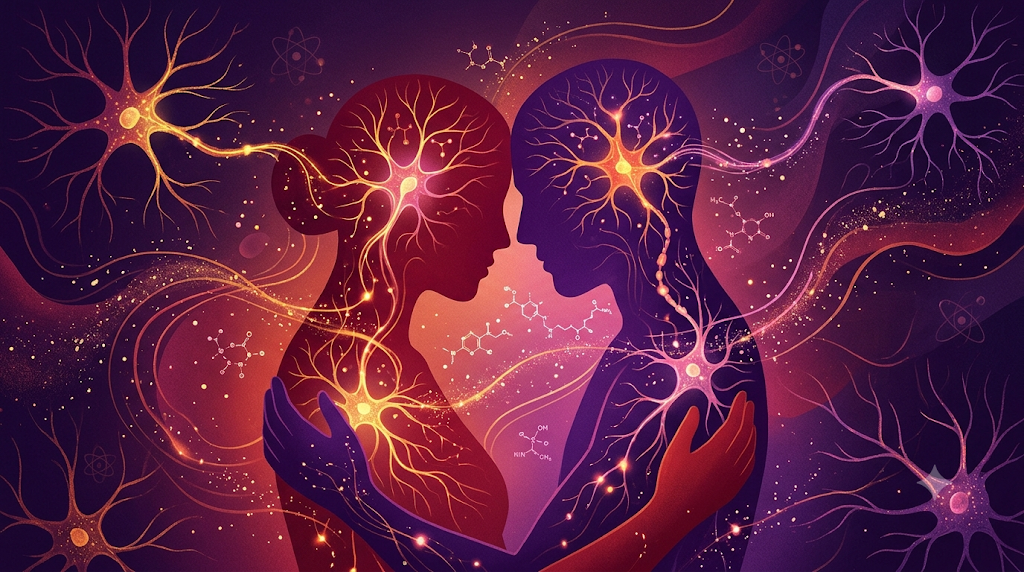
For centuries, poetry and literature have framed romantic love as a mystical, unpredictable force—something you "fall" into and hope to survive. But modern science offers a vastly different, and far more empowering, perspective. A long-term romantic relationship is not a fairy tale; it is a highly responsive biological and psychological ecosystem.
When couples thrive, it isn't just because of good communication or shared hobbies. It is because they have, consciously or unconsciously, mastered the art of managing their shared neurobiology, their emotional safety, and their physical intimacy.
To foster a truly healthy relationship, we have to look at the whole picture. Here is how psychology, sexual health, and the invisible "hormone playwright" interact to build—or break—modern relationships, and how you can use this science to deepen your bond.
The Hormone Playwright: Directing the Show Behind the Scenes
Every interaction with your partner is mediated by a complex cocktail of neurochemicals. Understanding this "hormone playwright" helps explain why relationships change over time and why stress is the ultimate enemy of intimacy.
1. Dopamine: The Spark of Novelty In the early days of dating, your brain is bathed in dopamine, the neurotransmitter responsible for reward, craving, and hyper-focus. It’s what gives you butterflies and keeps you up talking until 3 AM. However, dopamine is triggered by novelty and anticipation. Biologically, the dopamine flood naturally recedes after 12 to 24 months. Couples often panic when this happens, mistaking the drop in dopamine for a loss of love. In reality, it is simply the brain making room for the next phase of biochemical bonding.
2. Oxytocin and Vasopressin: The Superglue As dopamine settles, oxytocin (the "cuddle hormone") and vasopressin step in. These chemicals are released through physical touch, skin-to-skin contact, eye contact, and orgasm. They promote deep attachment, trust, and a sense of calm. If dopamine is the spark that starts the fire, oxytocin is the steady heat of the glowing coals. Fostering a long-term relationship requires prioritizing behaviors that release oxytocin, such as holding hands, hugging for longer than 20 seconds, and non-sexual physical affection.
3. Cortisol: The Intimacy Extinguisher Here is the biological catch: oxytocin and cortisol (the primary stress hormone) operate on a biological seesaw. When cortisol goes up due to work stress, financial worries, or sleep deprivation, oxytocin production is suppressed. You literally cannot feel deeply bonded to your partner when your nervous system is in "survival mode." Managing outside stress is not just good for your heart; it is a fundamental prerequisite for romantic connection.
The Psychology of Connection: Emotional Safety and "Bids"
Hormones set the stage, but psychology writes the script. The foundation of a healthy psychological ecosystem in a relationship is emotional safety—the neurological conviction that your partner is not a threat, that they will not mock your vulnerabilities, and that they are in your corner.
According to Dr. John Gottman, one of the world's leading relationship researchers, this safety is built through micro-moments he calls "bids for connection."
A bid can be as simple as your partner saying, "Look at that beautiful bird," or as vulnerable as "I had a terrible day." You have three ways to respond to a bid:
Turning Toward: Acknowledging them ("Wow, what kind of bird is it?").
Turning Away: Ignoring them to keep scrolling on your phone.
Turning Against: Responding with hostility ("I'm trying to work, stop interrupting me").
Gottman’s research found that couples who stay together happily turn toward each other's bids 86% of the time. Couples who divorce turn toward each other only 33% of the time. Fostering psychological health means aggressively paying attention to the mundane, everyday moments and actively choosing to engage.
The Science of Sexual Intimacy: Brakes and Accelerators
Physical intimacy is where hormones and psychology physically collide. However, cultural myths about sex often set couples up for failure, particularly regarding how sexual desire actually works.
To foster a healthy sexual relationship, couples must understand the Dual Control Model of Sexual Response. Imagine your sexual nervous system as a car. It has an accelerator (the Sexual Excitation System, which notices sexy stimuli) and a brake (the Sexual Inhibition System, which notices reasons not to be aroused, like stress, body image issues, or an unresolved argument).
For many people, a drop in sexual intimacy isn't because the accelerator is broken; it is because the brakes are pressed all the way to the floor. Cortisol, exhaustion, and unresolved psychological resentment are the heaviest brakes in the human body. To improve sexual intimacy, couples often find more success in identifying and removing the brakes (e.g., sharing the mental load of household chores, creating a relaxing environment) than trying to forcefully hit the accelerator.
Furthermore, it is vital to recognize Responsive Desire. Media teaches us that desire should be spontaneous—a sudden bolt of lightning out of nowhere. But for a massive percentage of the population (especially women in long-term relationships), desire is responsive. This means the physical arousal happens first (through kissing, massage, or relaxing touch), and the mental desire shows up second, in response to that pleasure. Waiting for spontaneous desire to strike before initiating physical intimacy can leave couples waiting forever.
Putting It Into Practice
How do you apply this biopsychosocial science to your own relationship?
Introduce Novelty for Dopamine: You don't need a new partner to get a dopamine hit; you need new experiences with your current partner. Take a class together, travel to an unfamiliar place, or change up your routine. Novelty triggers the brain's reward centers and associates that thrill with your partner.
Touch Without Agendas: Increase your oxytocin baseline by engaging in frequent, affectionate touch that is not a demand for sex. This removes the "brakes" of performance anxiety and fosters deep physiological safety.
Co-Regulate Stress: When your partner is stressed (high cortisol), their brain cannot access logic or deep empathy. Do not try to solve their problems or argue during these moments. Use co-regulation: a warm hug, a calm voice, and active listening to help their nervous system step out of fight-or-flight.
Catch the Bids: Make it a daily goal to notice when your partner is asking for your attention, however subtly, and turn toward them.
A healthy relationship is not something you magically find; it is something you biologically and psychologically cultivate. By managing your stress, respecting the mechanics of desire, and turning toward one another in the small moments, you build an ecosystem where love doesn't just survive—it thrives.
Medical Disclaimer: The information provided in this article is for educational and informational purposes only. It is not a substitute for professional psychological counseling, sex therapy, or medical advice. If you and your partner are experiencing significant distress, consider seeking the support of a licensed marriage and family therapist (LMFT) or a certified sex therapist.